
Tara Maclay using magic.
Magic was the accumulation of all supernatural power that was inherent to all creatures.[1] This force did not violate the laws of nature, but it simply had a law unto itself that remained a mystery to the wider human population.[2] On Earth, all magic was born and made possible from the Seed of Wonder.[3]
Function
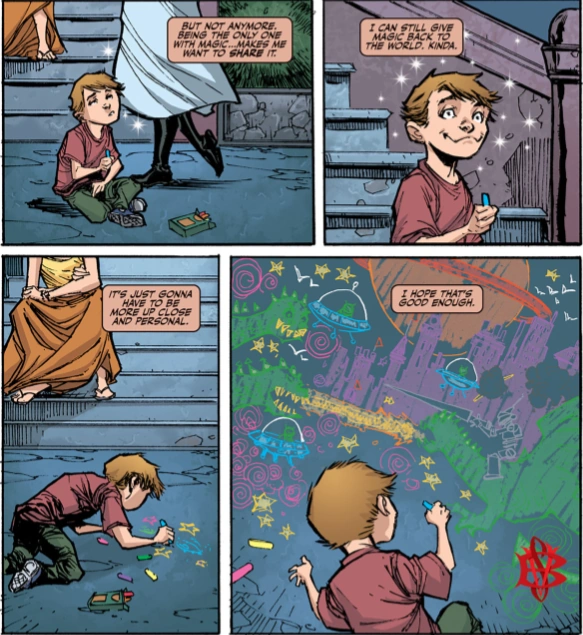
Willow uses magic to inspire a child.
Magic did not rewrite the laws of physics, but instead "works off physics"; adhering to the basic physical laws of nature. Consistent with the Law of Conservation, magical energy could not be created nor destroyed, but transferred with the help of a catalyst (for example, Kraken's tooth, skin of Draconus, ground up Baltic stones, etc.).[2] Willow Rosenberg compared the study of chemistry to witchcraft, claiming it was a lot like the latter, except only "less newt."[4]
The basic components of magic were the energy being transferred, the individual or objects transferring that energy, and the specific actions involved that influenced the result of that energy's transfer.[2] According to Rupert Giles, magic could be considered an exotic form of energy that could be disrupted, not unlike conventional energy.[5]
According to Willow, magic was not only a means for changing reality, but also an essential aspect of life overall, as it was responsible for the immaterial gratification experienced by everyday people (especially such things as art, love, music, poetry, and even the will to live).[1]
History
Seed of Wonder
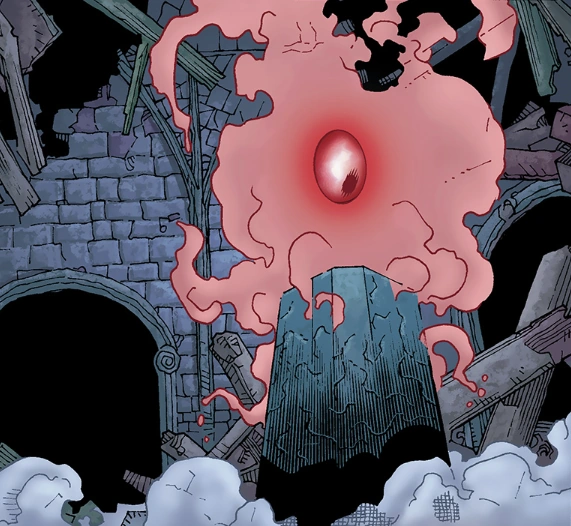
The Seed of Wonder.
All of Earth's magic, the metaphysical rules it adhered to, and the Earth itself originated from the Seed of Wonder, a powerful beacon that — upon coming into being — was responsible for containing all the demons and magical energies that spilled over from another dimension and keeping them in this dimension. The Earth's ties with other dimensions remained, along with the magical energies connected to them, so long as the Seed was in place, acting as a sort of gateway.[3]
If the Seed were removed from the dimension completely, the Earth would crumble.[3] If the Seed were destroyed within Earth's parameters, Earth's connection between the dimensions would sever, thus rendering the magic in those dimensions inaccessible to the Earth and all its inhabitants.[6]
The natural laws governing magic (and by extension the entire world) developed gradually over millennia. These changes were comprehensively recorded in the Slayer Handbook, a tome titled Vampyr.[7]
Human society
In the Primordium Age, three powerful elders by the name of the Shadowmen used their magic to fight the forces of darkness. They captured a young girl and imbued her with the powers of a demon, creating a supernatural warrior with physical attributes extending above those of most demons. This girl was known as the first Slayer.[2] A separate group, known as the Guardians, forged a weapon for the Slayer, which they kept hidden from the Shadowmen.[8]
The Temple of Sobek was an ancient Egyptian cult heavily involved in dark magic. They manufactured several transmogrification spells through the use of mystical blood stones and an amulet forged by their high priest, Khul, with the intention of creating an army of reptile warriors by transmogrifying them out of normal reptiles.[9]
Magic usage was present during the time of the Aztec empire. Tezcatcatl was a demon and one of the Aztecs' most powerful warriors who forged a mystical talisman that allowed him to access the power of the sun god. When his plan was discovered, Tezcatcatl was sentenced to death on the Day of the Dead. However, before his execution, Tezcatcatl had managed to strike a deal with a shaman, who cursed him to come back every 50 years to reclaim his talisman.[10]
In the late 15th century, an Inca Princess was sacrificed to the mountain god Sebancaya to defend her people from the nether world. Her mummified corpse was buried inside a tomb with a cursed seal that prevented her from regaining life.[11]
In Cortona, Italy, 1418, an order of monks led by Brother Thelonius used a magic ritual to trap the demon Moloch in a tome after he mesmerized and killed several townspeople.[12]
In 1898, a clan of Kalderash people conducted a ritual that restored the soul of the notorious vampire Angel after he killed their favorite daughter. The return of Angel's soul reawakened his consciousness, causing him to endure the guilt of the many people he had killed for over 150 years.[13] Such a powerful spell ceased to exist over the next century as the transliteration annals were lost, rendering the remaining text indecipherable until Jenny Calendar translated it in 1998 using a computer program.[14]
The idea of magic as an actual functioning force was not widely known in mainstream human society.[15] While the Watchers Council was aware of magic and employed alchemists,[16] the Initiative, a government agency tasked with studying demons, was unfamiliar with the power magic had and failed to take it seriously.[17] However, Drextalcorp Recycling Technologies, a government-run organization, seemed to possess better knowledge on the subject.[18] According to the Watchers Council, witches were required to be "registered."[19]
Even though some humans did genuinely believe in magic, their knowledge of what magic actually involved tended to be rather limited. For example, the Daughters of Gaea was a Wicca group based in UC Sunnydale that consisted of nothing but "wanna blessed bes" who didn't know anything about real magic, up until 2003 when they consisted of real magic practitioners.[15] Also, the Dragon's Cove sold genuine magical items, but the majority of purchases made were of Ouija boards and rabbit's feet.[14]
Technopaganism was the usage of modern technology, such as computers, in magic rituals.[12]
Other events
- Ley Line War of '78[20]
- War of the Warlocks[21]
- Age of levitation[21]
- The controversy surrounding resurrection[21]
End of magic
- “This is what I'm talking about, Buffy. You don't realize how the destruction of the Seed affected everyone. You only think about how it affected you. All the Slayers, the vampires, even the demons with the magic mojo. You all got to keep your power because it was inside of you. But everyone else got cut off from what made them tick. For me, it's magic. For that demon, his home.”
- ―Willow Rosenberg[src]
Early in the 21st century, Buffy Summers had multiple Potential Slayers activated worldwide into full Slayers with the help of the Scythe.[22] This revolution unknowingly set in motion the prophecy of Twilight, which foretold that a Slayer would change the world and bring about the creation of a new dimension in place of Earth: that Slayer being Buffy and that dimension being Twilight.[23]
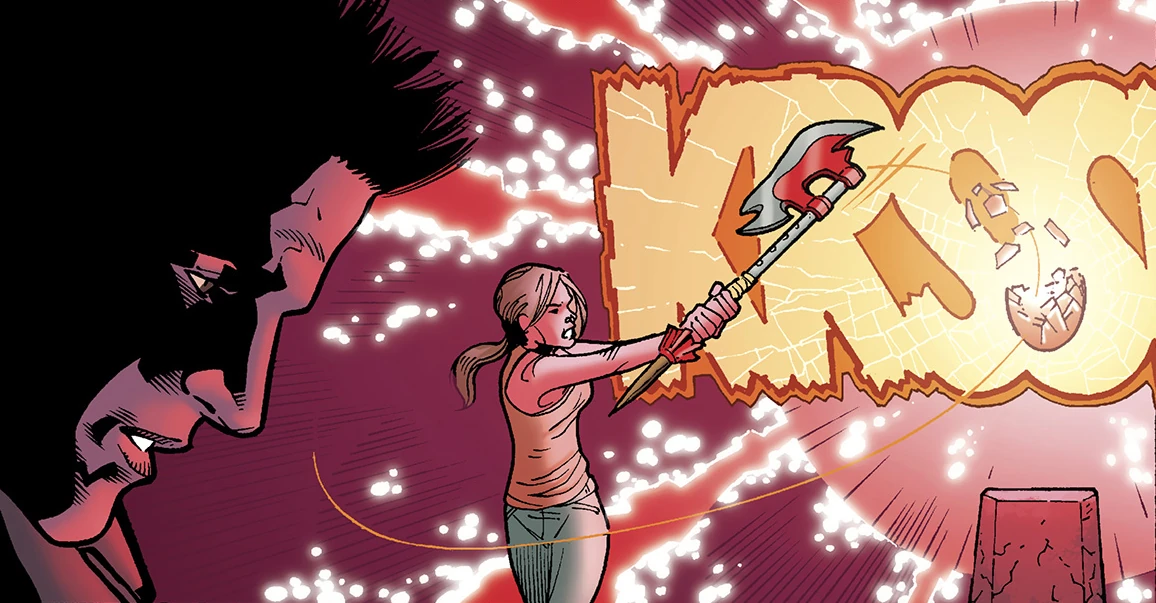
Buffy destroys the Seed of Wonder.
Twilight granted Buffy and Angel with deity-like abilities[23] and convinced the latter to secretly work against her to protect the world from the inevitable apocalypse involving the Slayer Organization.[24] When Buffy discovered Angel's deception, Twilight manipulated them into having intercourse[25] that would give birth to Twilight's dimension.[23]
Twilight's birth unleashed hordes of demons on Earth through interdimensional portals. The demons desired to remove the Seed of Wonder from Earth to complete the prophecy.[26] As Buffy and her cohorts attempted to protect the Seed, Twilight possessed Angel to finish what he started.[27] It was when Twilight killed Giles that his plan backfired.[6]
Overwhelmed by the grief caused by Giles' death, Buffy destroyed the Seed of Wonder using the Scythe. The doors to other dimensions were closed off from the Earth, sending the demonic hordes back where they had come from and averting the apocalypse. Twilight and his newly created dimension were banished from this world, and the Earth was safe from it.[6]
With the Seed broken, Earth became essentially without magic. While magical beings, such as Slayers, demons, and vampires already present in this reality continued to exist, the Slayer line was rendered dormant,[28] and all vampires sired after the Seed's destruction were mindless creatures known as zompires.[29] Magic practitioners (witches, warlocks, archmages, etc.) could no longer draw on magic.[30][31]
Magic plague
The effects of the magic plague orb.
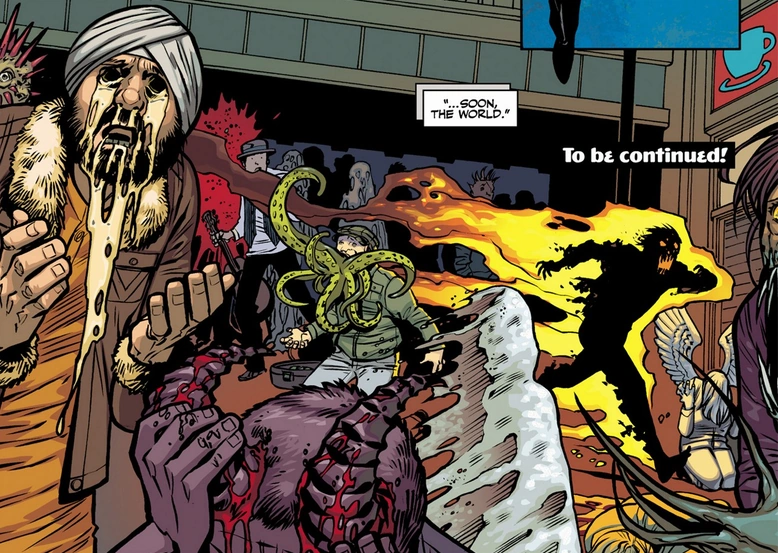
In an effort to restore the Earth's magic and initiate the next step in demon-human evolution, the sibling duo Pearl and Nash collaborated with Whistler to concoct a "magic plague orb," a vessel composed of the residual magic found in numerous artifacts.[32][33] They intended to use it to spread the magic contained inside all over the world, but accidentally ended up dropping the ball into a small district located within Hackney, London.[34]
Such a dense concentration of unfettered magical energy in such a small space instantly caused the area's inhabitants to mutate into monstrous and inhuman beings. These mutations consisted of debilitating afflictions, benign physical changes, mystical transformations, or even supernatural powers.[35][36]
Whistler intended to continue his plot to spread the ball's magical energies across the world at the expense of people's lives.[35] However, Angel appealed to his humanity, and Whistler chose to merge the magic plague orb into his body to contain the energies within, sacrificing himself to prevent it from reverberating outward and possibly destroying the whole of England.[36]
Due to the national coverage of the disaster[36] and the ostracization from the outer world, the thousands of humans affected by the plague formed the supernatural ghetto known as the Magic Town, where the mystical mutations persisted after the initial outbreak.[37]
Return of magic
- “Music, poetry, everything's going bad. This isn't just me not liking new trends. No one can hit a note, everyone's auto-tuned. Coke doesn't taste right anymore. I see examples everywhere. It's not just that there suddenly aren't witches and the occult around now. Suicide rates are moving up everyday. It's the inspiration, the dreams. All the things that make life so wonderful. It's just not quite... there like it used to be. So I'm setting out to do something about it. To bring magic back.”
- ―Willow Rosenberg[src]
A new Seed is created.
In a dream, the First Slayer revealed to Buffy that the Slayer Scythe was the key to restoring magic to the world. Willow took it upon herself to revive Earth's magic with the help of the Scythe.[38] She planned to travel to the hell dimension Quor'toth and gather as much magical energy as she could there, using a combination of the residual energy of the Scythe and Connor to open up a portal to Quor'toth.[39]
As a result of her travels through Quor'toth and various other dimensions, Willow discovered a way to draw on the natural magic inherent to all living things. The technique would be capable of restoring magic to Earth;[40] however, its users would have far less power than they once possessed.[41]
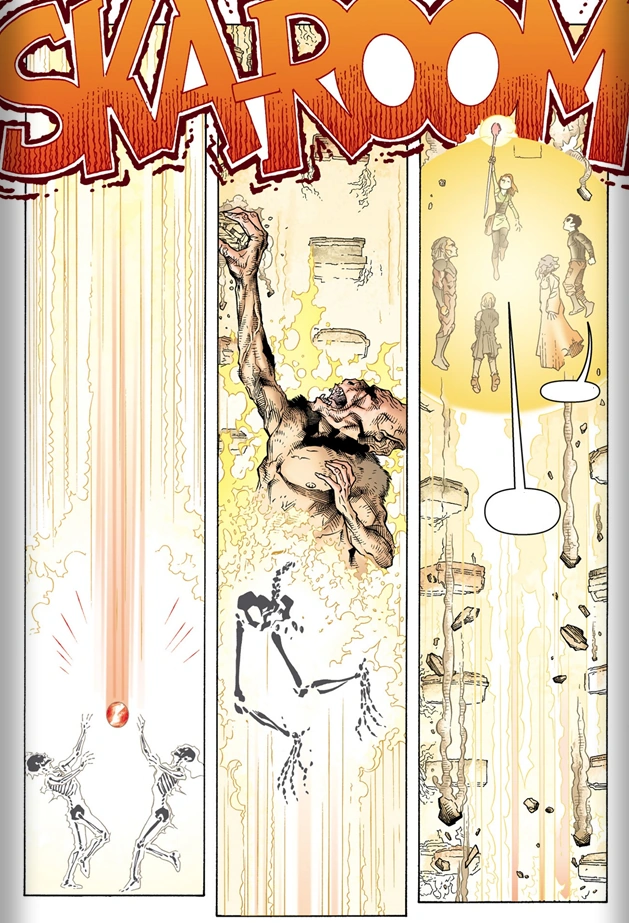
Willow descended into the Deeper Well to absorb the massive amounts of magical energy there, having already accumulated a large portion at Quor'toth. As she reached the depths of the Deeper Well, Willow absorbed so much energy that a new Seed of Wonder was spawned directly inside her body and rendered her powerless in the process. However, the Seed needed millennia to mature.[42] Severin proceeded to age the new Seed to completion, restoring magic to the world,[43] albeit with different rules than before.[7]
New rules
Xander writes new rules on the handbook.
- “But now magic is new again... Raw and undefined. And I've got the power to bend it at my will”
- ―Andrew Wells[src]
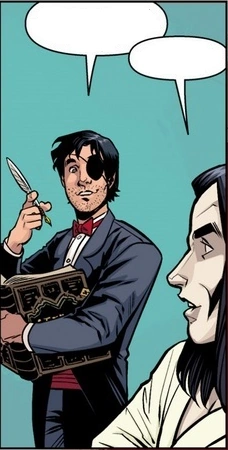
As magic was restored on Earth, the rules governing it were reset and open to molding through the Slayer Handbook. The pages of the handbook were rendered completely blank when the new Seed was created;[43] eventually, new entries formed, establishing new rules based on intense desires in the universe,[44] and, likewise, new rules could be concocted by writing them in the book.[45]
Examples of new rules and changes included:
- Newly sired vampires presented more powers than their previous counterparts. They could shapeshift into different animals at will, walk in daylight, possessed greater strength, and were harder to stake. Buffy postulated that, because vampires had wanted to become stronger, this desire transcribed itself into the handbook and into reality, giving them powers similar to Dracula, the most well-known vampire.[46]
- Winifred Burkle was fully resurrected with Illyria, even though her body had been destroyed.[47]
- Manipulating magic worked entirely differently from before, forcing adept magic-users to learn a "whole new operating system" to utilize their powers.[48] For instance, spellcasting no longer required incantations of dead languages; in fact, Willow could conjure a bunch of flowers by uttering "boom shaka laka."[46]
- Billy Lane — a male vampire hunter — experienced a vision of the First Slayer, something only Slayers had.[7] Buffy postulated that his desire to be a Slayer altered the criteria for how a Slayer was chosen.[46]
- Dracula was transformed into the form of Maloker after Alexander "Xander" Harris described him in the book as the original vampire. The rule was subsequently reversed.[45]
Magic Council
The Magic Council.
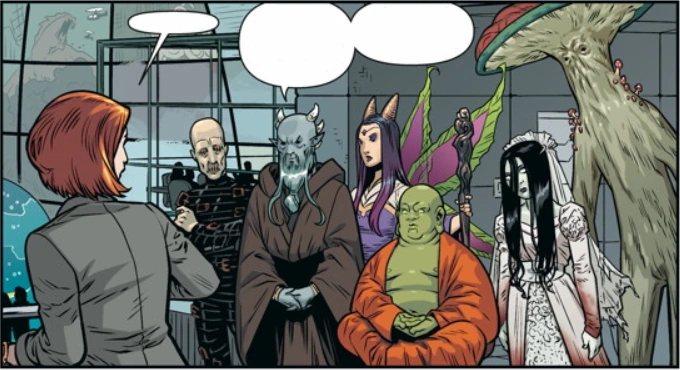
The Magic Council was a group of powerful supernatural entities from numerous walks of life. They assembled during the absence of magic to preserve what little magical energy remained and to combat the threat of Severin the Siphon.[49]
With most of its members killed in the battle against Maloker,[43] a new council was assembled following the return of magic. With members hailing from various pantheons and with a wide range of interests, their common goal was to help facilitate the new rules governing magic.[50]
Magical energy
- “It's magic. I'm drawing power from the earth to heal myself. [...] You know, Giles says everything's part of the earth. This bed. The air. Us.”
- ―Willow Rosenberg[src]

Rack emits magical discharges from his hands.
Magical energy was the potent force that was channeled and manipulated for magical purposes, often manifesting during these moments as colorful plasma-like matter. This energy — when being extracted or absorbed — usually resembled bright electrical discharges, though its appearance varied between different spells.[51][52][53]
Magical energy was a key component in performing magic, fueling the applications that magic allowed. Using too much magic could cause the user not to have energy thereafter to spend, thus limiting their capacity to perform magic and potentially requiring days for the user to recuperate.[52]
Any being was capable of harnessing this power, including humans,[54] demons,[55][56] vampires,[57][58] and even cyborgs.[59]
Sourcing energy
- “You're expending way too much of your mystical energy to maintain your powers. At this rate you're going to... burn out. And up.”
- ―Rupert Giles[src]

Willow absorbing the magical energy from a bundle of black arts books.
In order to perform magic, the user had to channel that energy from a source and exert it through themselves. While more experienced magic users could use the magical energy inside of them, magical energy usually needed to be drawn from external sources.[60] These sources ranged from special artifacts (such as the Scythe),[22] higher beings (like Yeska) that granted this power,[61] or even drawn from the Earth itself.[62]
Because the Earth acted as a conduit for magic, a person could draw this power anywhere on the planet, as every being and object was connected to the Earth, meaning that every person had at least a small sum of innate mystical energy. Willow was able to utilize this to quickly heal her wounds by simply meditating in her bedroom, though she also needed Buffy's help to accelerate the process.[62] A more aggressive instance occurred when Willow performed a temporal portal spell using the combined life force of Kennedy and Anya Jenkins by forcibly pulling it from them.[2]
Certain spells could also cause a significant surge of power into the caster. An example of this includes the Ritual of Restoration performed by Willow,[63] which Giles claimed that this could "open a door that that [Willow] might not be able to close."[64]
Transferring energy
- “Just relax, I'm not gonna hurt you. You gotta give a little to get a little, right? [...] I'm just gonna take a little tour.”
- ―Rack[src]

Rack and Willow share each other's magical power.
One way of gaining magical energy was through transferring it among other users, which could be done by sharing[52][62] or forcibly taking it. The transferrence usually required physical contact,[52][62][65][66] but an exceptionally powerful practitioner could drain that energy without any contact[2] and not only drain the energy without the other person knowing, but also decode it to manipulate as they wished.[67] Draining too much energy from one user could kill or at least weaken them, as it also drained their life force.[2][65][66] Alternatively, one could drain another's magic to naturalize them. Willow was strongly opposed to it and compared it to cutting off someone's hand, while other witches considered it a form of mutilation.[68][69]
Magic users could give some of their own magical energy to others, as seen when Amy Madison transferred a portion of her energy to Willow via a spell.[53] Absorbing unexpected bursts of magical energy could have unwanted effects, such as vomiting, eye color changing, and unintentionally affecting one's surroundings magically.[53][70]
Willow claimed that absorbing surplus amounts of magic gave a feeling of being over-energized, which made it harder to control.[71]
Magic could also be transferred into a host for a limited time, as was the case with Giles, who had immense magical power bestowed upon him by the Devon coven in England, which then sent him to Sunnydale in an attempt to stop a rampaging Willow from destroying the world.[66]
Residual energy
- “She'll find a work-around. More layers of magic hide the magic. Besides, it's not just her. All these Slayers — we're magic right out of the box. [...] If Twilight smells magic, he'll smell all of us.”
- ―Buffy Summers[src]
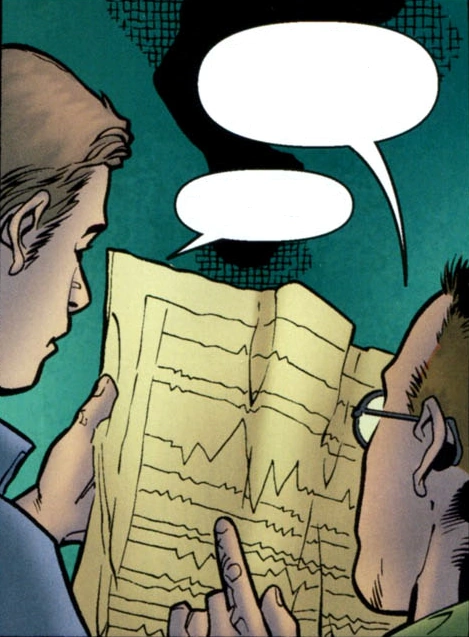
A graph depicting a "spike" of magical energy.
When an individual cast a spell, they channeled magic through themselves, and a portion of that magic remained within them. The magical energy was detectable by those (such as Sweet and Rack) who could sense that energy from practitioners and could inform them of that person's magical power, including what spells they cast, the magnitude of their power, if that power was depleting, and what they intended to do with it.[52][72]
Jonathan Levinson, who possessed some magical ability, could "practically feel" that Willow was running out of magicks;[65] Rack immediately knew that Amy had been a rat years after they last had contact;[52] and a coven from Devon sensed the dangerous magical force Willow possessed, fueled by her grief.[65] Willow was so powerful that she could sense energy from another plane,[73] deduce that some of Amy's spells "reeked" with tech, and trace back to where Amy had teleported from.[67] Willow and Giles were able to deduce that the summoning of a storm dragon was a deliberate act by analyzing the energy infusing it.[74] Casting powerful spells could exert a notable amount of energy that was capable of interfering with the casting of lesser spells and make the location of the casting susceptible to being discovered.[75]
Twilight's army possessed technology that detected large amounts of magic usage, but it wasn't easy to pinpoint the exact origin of the energy as it was abundant in all magical beings.[76] Also, Giles used an enchanted lodestone to detect concentrations of magical energy within London.[77] Once nearby the magic plague orb, Giles recognized "the taste of ozone and jasmine" and a "tickle in [his] cerebellum" due to the magic in the air.[34]
While all beings on Earth were connected to magic, beings like Slayers, witches, and werewolves possessed a greater concentration of energy. As this fact made the Slayer Organization more detectable to Twilight, they decided to withdraw their energy by practicing the tradition of Bon, which stated that a person could make their internal magical energy flow out of themselves and redirect it back into the Earth. They did this by performing hard labor in a Tibetan monastery without using their super strength. This method also allowed werewolves, such as Daniel "Oz" Osbourne, to control their lycanthropy.[76][78] It was later revealed that they were actually redirecting their magic to a trio of earth-bound wrathful goddesses who protected the monastery in exchange (but eventually attacked the Slayers due to their confusion).[79][80]
It took many months for a person to clear themselves completely of magical energy.[78] After months of not using any magic, Willow could still perform spells despite not using any tools or special preparations.[81]
Usage and execution
- “Magic, General. You still have to learn the rules.”
- ―Scientist[src]
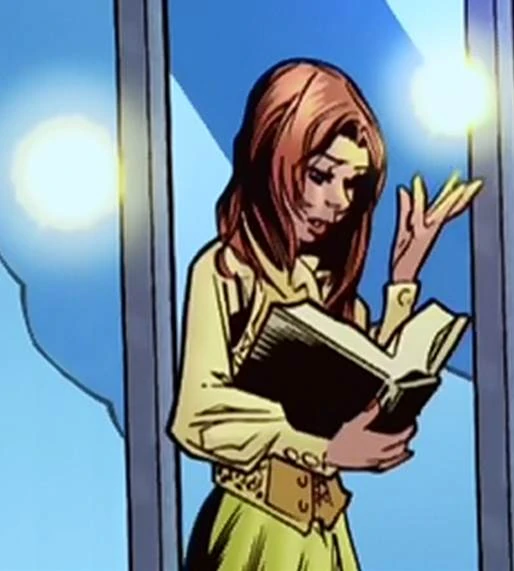
Willow studies before undertaking a spell.
In essence, the rudimentary process for using magic was simply drawing mystical energies and manipulating them for a desired effect.[78] However, there were many factors involved that determined how successfully this energy could be used and what it could be used for. Successful magic involved a combination of knowledge, power, resources, and experience. Possessing an intricate mastery of these aspects could reduce the need for complex preparation and strengthen the individual's ability to perform powerful magicks without using as much time or effort, but will and power alone.[81]
Methodology
Spells
Tara casts a releasing spell.
The most common form of performing magic was by casting a spell, in which the recitation of a text summoned a particular force — demons,[82] spirits,[17] or deities[83] — to affect reality in a determined way. Many spells involved just exclaiming an incantation for it to work (Hammer of Govannon[66]), but some others could have additional requirements. Some spells came in the form of rituals: a combination of physical actions, spell recitation, and use of certain ingredients (Algurian body-switching spell[84]) to manipulate reality, and they might even require specific times (the Harvest[85]) and locations (the Vision Quest[86]).
Despite this, the amount of effort put into a spell could depend on the individual's level of power and experience. For instance, the ritual to invoke Osiris to resurrect an individual was a strenuous affair that couldn't be completed without an urn of Osiris.[87] The fact that Willow was able to accomplish the spell survive the process was impressive.[88] Months later, Willow attempted a resurrection again, this time without any tools or special preparations, after months of not using any magic, being only denied due to the nature of Tara Maclay's death.[81]
Spells left a trace signature after they were cast, which weren't perceptible to the human eye unless the ritual Tirer la Couverture was performed.[89]
Tools
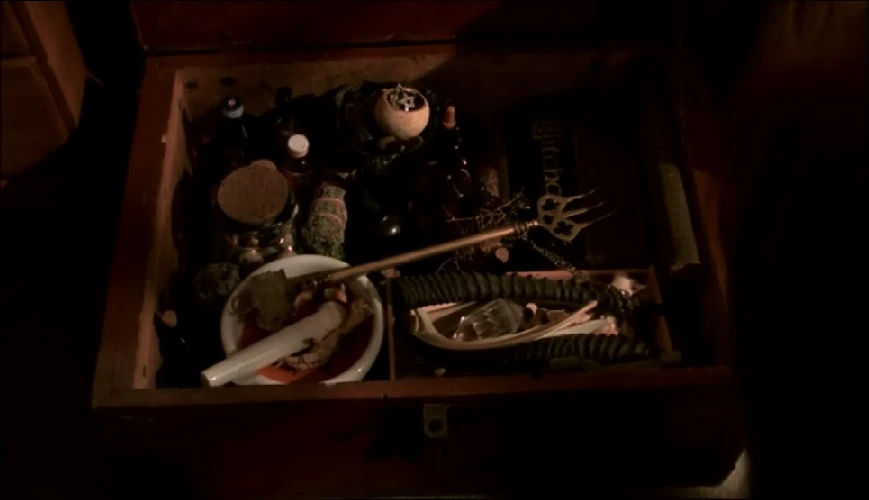
A chest with magical tools.
Certain objects possessed magical properties and could form the catalyst for magic use. For all intents and purposes, magical practitioners might use various tools to perform magic, such as:
- Talismans: Physical objects that had been imbued with mystical properties.[90][91]
- Cauldrons: A container used to mix ingredients in.[54][92]
- Potions: Mystical substances created from the mixing of certain ingredients, which resulted in a concoction with magical properties.[54][93]
- Crystal balls, tarot cards, and casting bones were employed during certain divination rites[94][95][96] as well as other non-related spells.[17][64]
Training and potency
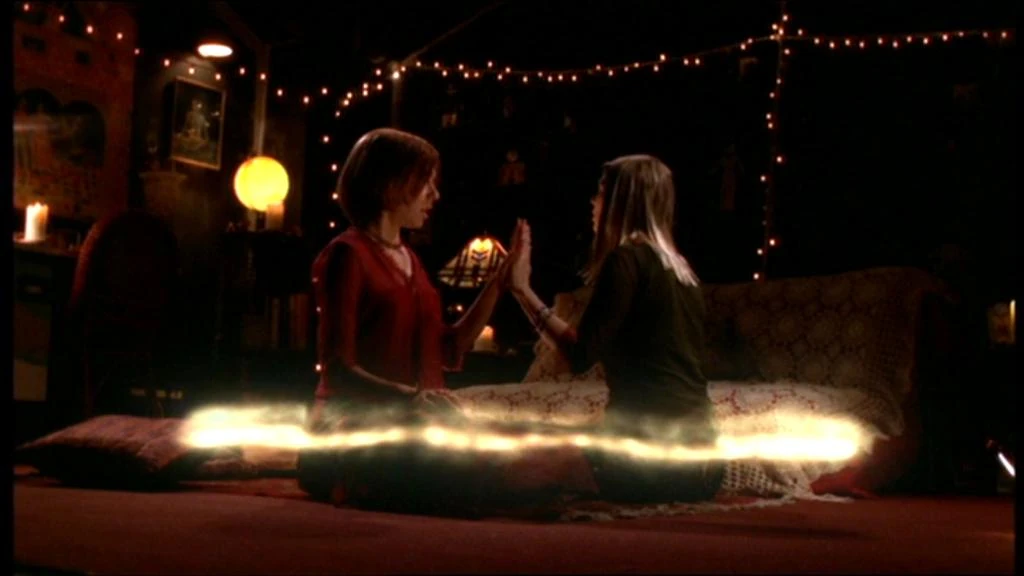
Willow and Tara practice a ritual.
With proper training, magic practitioners become capable of performing feats of magic through sheer will. These acts ranged from minor telekinesis,[97] levitation,[98] and glamours,[99] which were suitable steps for inexperienced practitioners,[100] to more complicated feats of transmogrification,[83] conjuration,[101] firing energy blasts and lightning bolts,[65] and even flight.[102]
Some people, Willow, for example, had a greater inherent talent for magic than others who had to work "twice as hard to be half as good."[103]
There also seemed to be a commonality between magical power and family heritage, particularly on the maternal side. For instance, both Tara[104] and Amy[83] were powerful witches, and both of them had mothers who were also adept at using magic.[15][54]
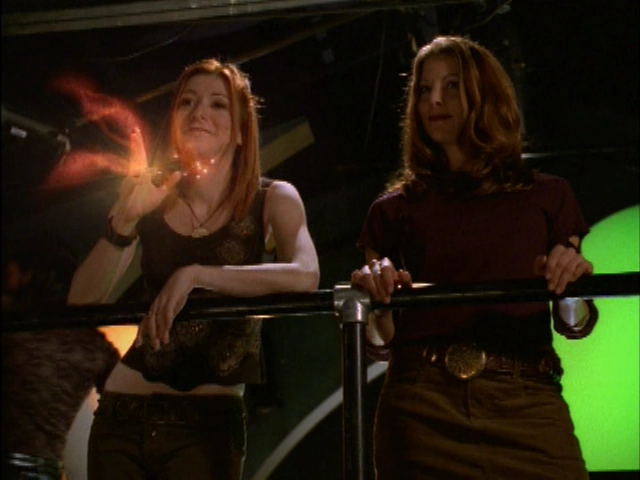
Willow uses magic at will.
Even though all living beings, humans[105][89][106] and non-humans[107][9][108] alike, were capable of performing spells by using artifacts and incantations, witches and warlocks typically had greater knowledge and power over such forces. The technopagan Jenny Calendar, while able to cast spells and use methods of divination, did not call herself a witch because she didn't have "that kind of power."[12]
Having a natural talent for magic didn't necessarily guarantee that one would develop into a potent magic practitioner. Giles originally repressed his talent as a young man and diminished his ability to perform magic as he became older. When he was resurrected in his preteen body, his magical powers surpassed those from his previous life, and he stated that he had the opportunity to develop them further in this one.[109]
Having a vast array of knowledge wasn't the only factor that determined if someone was sufficient in accomplishing a particular magical action. For instance, Giles was fluent in several ancient languages and well-versed in a multitude of texts about demonology and witchcraft. However, he didn't possess the amount of magical power Willow demonstrated, who, in turn, wasn't nearly as knowledgeable as Giles was. To use powerful Sumerian spells against Adam, the Scoobies had to combine their essences (along with Xander and Buffy's) in an enjoining spell, since those spells required both Willow's power and Giles' multilingualism.[17]
The Watchers Council rated a magical practitioner's power and skill by a "magical proficiency level."[19]
Invoked names
Many spells called for or named beings in their incantations. Such named demons and deities, and their specialties included:
- Aradia: Guiding spell[100]
- Asmodea: A presumably offensive spell[66]
- Cadria: Blinding curses[98]
- Cassiel, Hera, Kali, Kronos, and Thonic: The thick air spell[110]
- Corsheth and Gilail: Reversal spells and the Curse of Corsheth (Corsheth only)[54]
- Diana: Love spells[83]
- Eligor: The vampire restoration ritual[111]
- Granath: Reanimation spells[112]
- Hecate: Transmogrification spells.[83]
- Janus: Transmogrification spell[113]
- Minerva: Protective spell[114]
- Osiris: Resurrection spells[87]
- Thespia: The locator spell[115]
- Other spells called upon demons such as Proserpexa.[66]
Whether these beings granted the practitioner's wish was dependent on the situation. For example, a demon chastised Willow for invoking Osiris in an attempt to resurrect Tara and defy the laws of nature.[81] Another instance involved Hecate, who was known for her impatience, seemingly refused to de-rat Amy when Willow summoned her, even though Amy originally summoned Hecate to turn her into a rat, as Willow wasn't as powerful as Amy at the time.[116] Also, the Davric demon Yeska, falsely considered a goddess among wizards, granted them power on their 50th birthday in exchange for a virgin sacrifice.[61]
Types of magic
Several branches of magic focused on a specific application, and they differed in the level of difficulty associated with performing them.
- Conjuration: involved creating matter out of nothing, one of the few magics that ignored physics. It was considered a powerful form of magic, and inexperienced practitioners were discouraged from conjuring, as it was hard to control what was conjured.[100]
- Transmogrification: involved transforming the shape and appearance of an object into something different. First-year practitioners could perform this form of magic, but it wasn't advised, as it was harder to reverse the effects.[83]
- Glamouring: involved altering how objects and individuals were perceived, both in terms of how they were seen, heard, and touched. It was considered a basic form of witchcraft, easy to learn and taught to non-practitioners.[21][117]
- Divination: involved the use of tools to predict future events. Apparently, it was a rather simple form of magic, as those with little power or experience with magic were known to use it, though this could depend on the method of divination used.[12][95]
- Flesh magic: an ancient form of magic that relied on flesh and blood rather than words or incantations. It was considered more powerful than word-based magic.[118]
Magical practices
The approach to performing magic varied widely, and there were different types of magical practice based on what methods the practitioner used and what results they hoped to accomplish. These practices could also serve as the practitioner's religious/spiritual belief system.[119]
Differences aside, mystic was an umbrella term for any individual with magical skills.[120][121] Known magical practices and their adherents included:
- Witchcraft: Individuals known as witches[54] and warlocks[122] were capable of casting spells.[54]
- Wizardry: Its practitioners were known as wizards.[61]
- Sorcery: Sorcerers employed dark or black magic in their spells.[123]
- Necromancy: Necromancers had power over the dead.[124]
- Alchemy: Alchemists applied magic over metals.[125]
- Shamanism: Shamans were capable of divination,[96] detection,[126] and transferring souls.[127]
- Technopaganism: Technopagans employed modern technology to delve into the supernatural world.[12]
- Voodoo: Voodoo priests were known to raise zombies[128] and use dolls with their target's likeness.[124]
- Druidism: Druids practiced magic by communing with nature.[129]
Good and evil
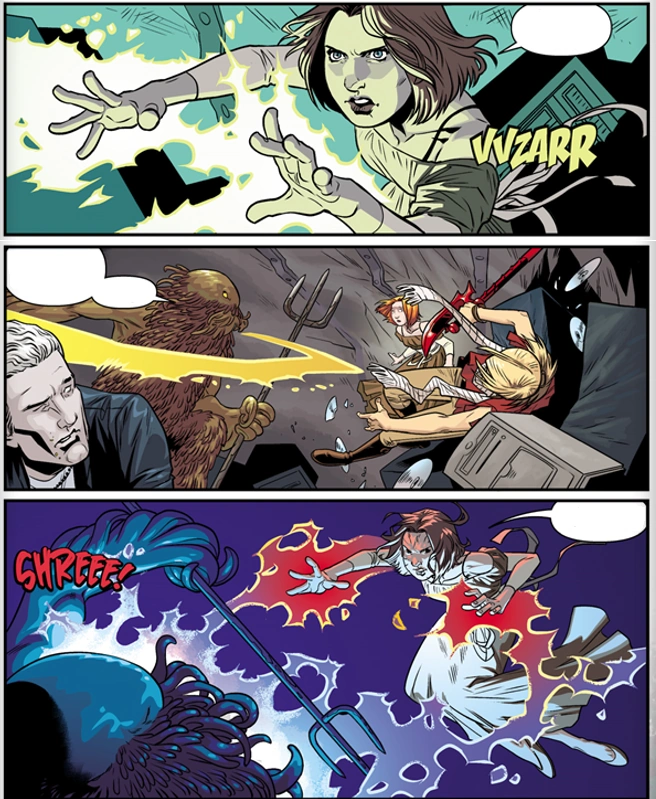
Willow alternates between white and dark magic.
Different magicks could be defined by their moral implications, power, and source.
Dark magic was often associated with powerful spells that posed a risk to others, the universe, or the caster, and often involved subjects considered against nature, such as resurrection spells.[64][87] These magicks could be found in certain spellbooks and came from a "place of rage and power."[66][81][110]
Good magic could be channeled for equally powerful spells and was sourced from things like the Earth, the Scythe, and the human soul.[62][22][130]
Individuals could be subject to either type of magic. For example, Willow was prone to being consumed by dark magic when upset or enraged,[90][131] but she learned to be balanced and use both light and dark.[40][132]
Limitations
Magic also had its limits and could have negative consequences on the user and those around them, both physically and mentally.
Addiction
- “Willow, you are using too much magic!”
- ―Tara Maclay[src]
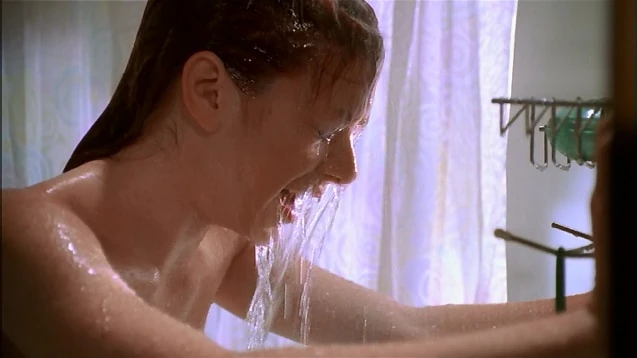
Willow feels the afterburn after a night of excessive magic use.
Overuse of magic could lead to a drug-like addiction, which, if left untreated, could eventually cause the practitioner to disintegrate or burn out.[52] For instance, a group of shamans became addicted to dark magicks to the extent that they eventually died.[133]
A prime example of magic addiction was Willow, who originally started to practice magic as a way to aid her best friend, Buffy, in the fight against evil. However, as her powers developed, she began to use magic for her own enjoyment and to solve her own personal problems.[101][129] The addiction reached a climax after she de-ratted Amy, who introduced her to the warlock Rack. Rack supplied the girls with magicks that fueled them for days without any burnout factor. These magicks created notable changes in their behavior, making them spaced-out and irresponsible, giving them symptoms characteristic of what one would receive under the influence of stimulants. It also caused physical changes in Willow: her eyes turned black, and she began emitting magical energy from her body.[52]
After one of her reckless uses of magic caused the creation of a dangerous demon, Willow realized things needed to change. She relinquished all of her magical items, such as crystals, tarot cards, crystal balls, and herbs, and vowed never to cast another spell again. She was even unable to make potions.[53] Despite dealing with some problems along the way, such as performing strange acts like carefully arranging straws and highlighting entire pages of a book,[53][134] Willow managed to overcome her addiction until Tara's death, which caused her to absorb the magical energy from dozens of books and go on a murderous rampage.[65] During this time, she did not exhibit any of the drug-like symptoms she had until she absorbed the collective energy via a coven from Devon.[66] After being convinced not to destroy the world, Willow received rehabilitation in England, learning to draw energy from the Earth while also still struggling to keep herself from becoming addicted again.[91]
Physical repercussions
- “Totally. And magic wasn't all great. I mean, I won't miss the nose bleeds and the headaches and stuff.”
- ―Willow Rosenberg[src]
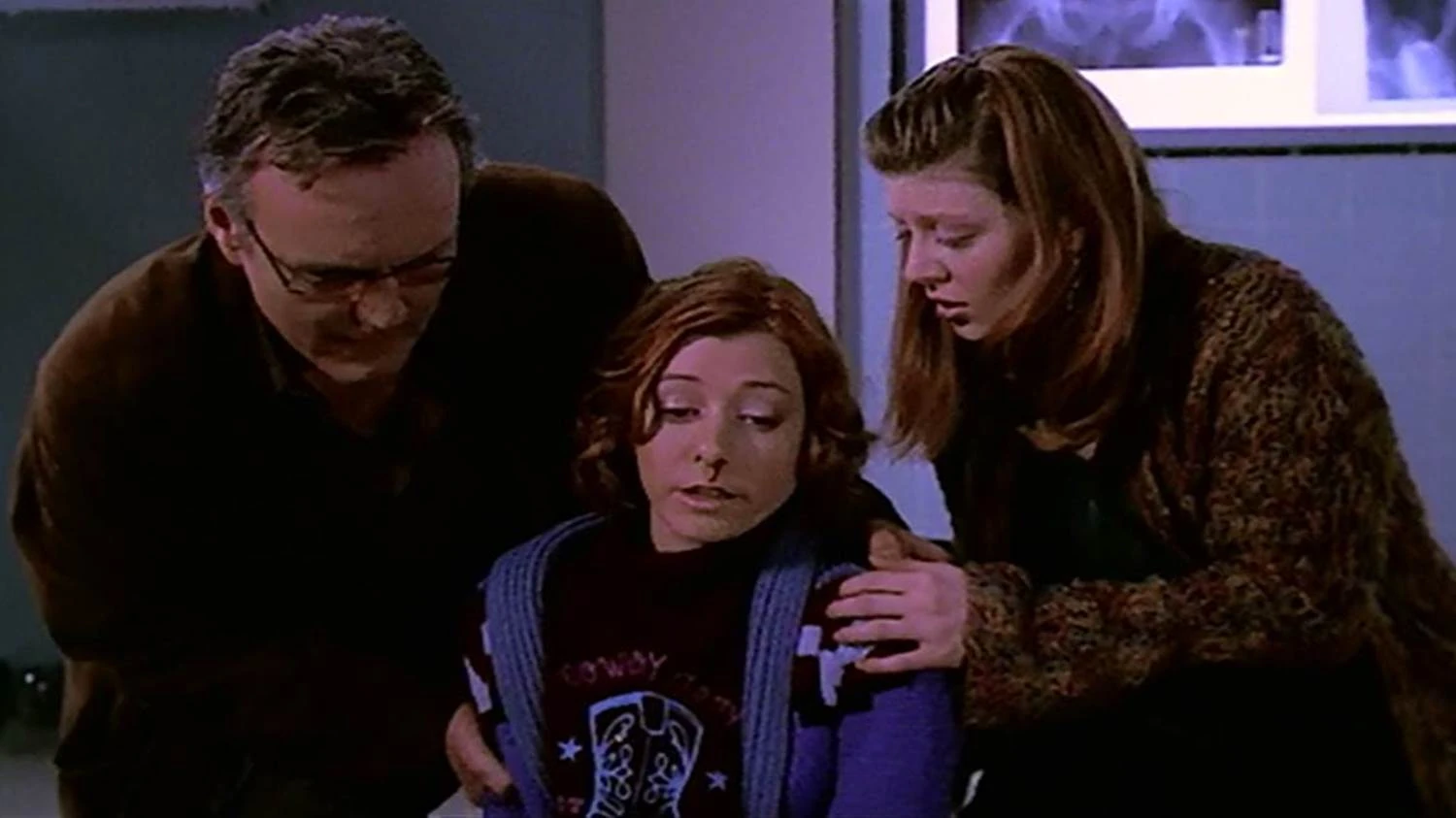
Willow falls over and gets a nosebleed after casting a teleportation spell.
Since magic required physical energy to function, only so much could be used at any one time as posited by Willow Rosenberg in her battle against the hell goddess Glorificus[110] and after resurrecting Buffy.[122] Likewise, after a night of heavy magic use, Willow returned home exhausted and unable to use even simple magic to close her blinds. Her condition clearly indicated that overuse of magic and lack of energy had localized detrimental effects on the practitioner's magic use.[52]
Magic could also cause mental duress and painful headaches, e.g., after Willow used a powerful teleportation spell on Glory,[135] she had recurrent headaches for roughly a week or so after.[136]
Nose bleeding was also common from magical overuse or after completing a powerful spell, as was the case with Willow several times, e.g., creating a large force field when the Scooby Gang were on the run from Glory and the Knights of Byzantium[137] and, likewise, when Willow created a force field to defend the Summers' home against a Turok-Han.[114] When the Slayers' base was under attack by Twilight's army, a few of the witches protecting the keep had what appeared to be brain aneurysms through severe overuse of magic, one of them even collapsing dead after having what Willow called a "brain fry."[79]
Despite all the negative effects, using magic could have a good effect on the user. After casting the Slayer activation spell, Willow was overcome with a powerful force of transcendence as the spell took effect, leaving her in a spent yet gleeful state as she collapsed on the floor.[22]
Risk factor
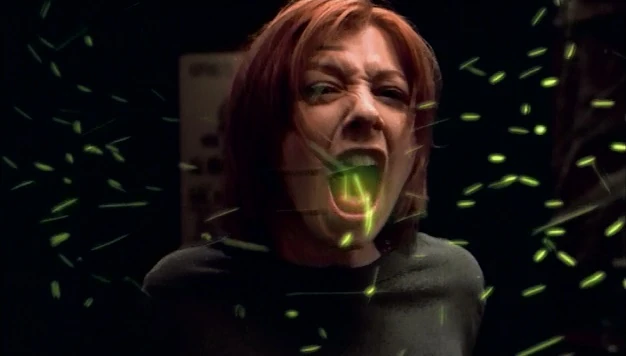
Willow is attacked by the fireflies she conjured.
Practicing magic was a risky operation as things could easily go wrong, resulting in an unwanted or even harmful after-effect. Giles once said that it was not wise for novices to perform spells with unfocused energy and unsupervised.[138]
Maintaining control while performing a spell was challenging in itself and required concentration. Willow could levitate a pencil at her will, as long as she retained "emotional control," and upon hearing something to her dislike, she accidentally torpedoed the pencil into a tree.[97]
When imprisoned in a frat house under the influence of Gachnar, Buffy warned Willow, who had been a witch practicing since the previous year, that she shouldn't cast a conjuring spell, and her spells were just "50/50." Willow proceeded to perform the spell anyway, and it ended up backfiring.[100] Tara expressed hesitation that Willow would be able to pull off a resurrection in which the ritual itself was a trial of torture.[122]
Spells could have unwanted results if things were to go wrong during the performance of one. A love spell that Xander had Amy perform on Cordelia went wrong, resulting in every woman in town becoming obsessed with him.[97] Willow tried to alter the memories of Buffy and Tara, but ended up removing all the memories from them, herself, Xander, Giles, Spike, and Dawn Summers, simply because she unknowingly left an entire bag of Lethe's bramble to burn, a necessary ingredient that enhanced the effects of the spell.[139]
Physical effects
- “I'm so angry at me, I cannot believe [my eyes] aren't black.”
- ―Willow Rosenberg[src]


Magic could also have manifestly visible and bodily changes on the caster, the most common of which was the caster's eyes turning completely black when using very powerful magic, or when wielding magic with evil intent or uncontrolled emotions. This change was visible in Catherine Madison and her daughter, Amy, when they performed feats of transmogrification,[83][54][116] and in Willow several times.[2][52][110]
Willow was subject to severe physical change after she absorbed the latent magical power confined within dozens of spellbooks, which turned her hair and eyes black and caused dark veins to sprout up on her face. After this point, whenever Willow overexerted herself, her hair and eyes turned black, and her voice often changed to sound deep and with a slight echo.[81] When Willow used the power of the Slayer Scythe to activate multiple Potentials in the world, her hair turned white, and her whole body began to glow.[22] After witnessing Tara's death, Willow's eyes turned red.[140]
When combining her essence with the essences of Willow, Giles, and Xander through an enjoining spell, Buffy's irises turned orange and eventually red for the duration of the spell.[17]
Behind the scenes
- In the Buffyverse, magic was known by several names, and the term "magick" was used as a countable noun (for example, "potent magicks"[64] or "the magicks"[65]). Colloquially, magical energy or magic in general has been referred to as mojo[65][83][114][141][142][143] and the whammy.[83][144] In reality, "magick" was the term the English occultist Aleister Crowley used to distinguish between the occult and stage magic in relation to Thelema. He defined magick as "the Science and Art of causing Change to occur in conformity with Will."